
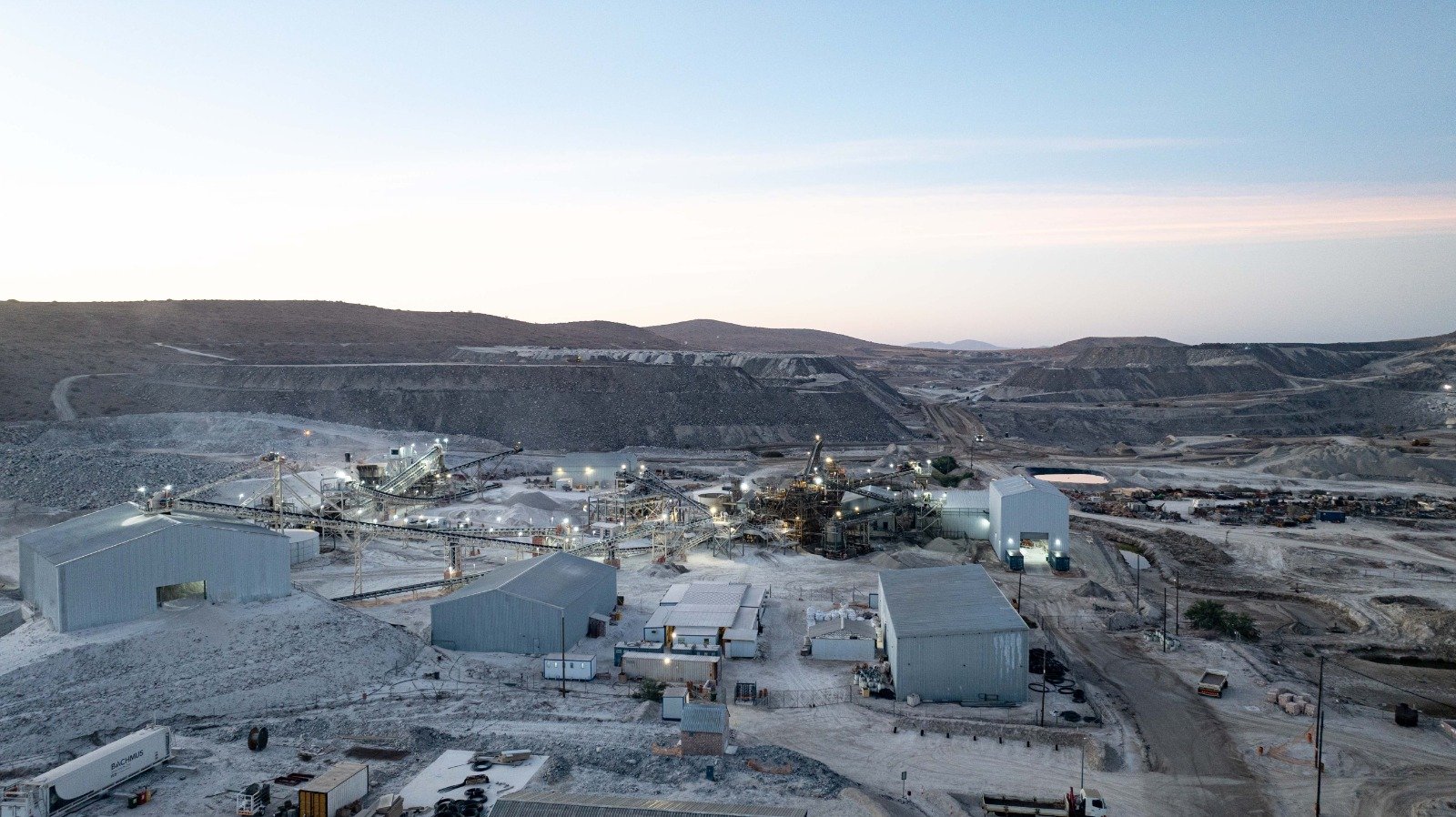
Andrada Mining Delivers Strong Tin Performance at Uis Mine Amid Global Price Rally
Critical minerals producer Andrada Mining, listed in London, has recorded notable operational gains at its Uis Mine in Namibia, benefiting from efficiency improvements and a strong upswing in global tin prices.
For the quarter ending November 2025, the company produced 429 tonnes of tin concentrate, representing a 14% increase compared with the same quarter a year earlier. Output of contained tin climbed to 255 tonnes, up 10% year on year, supported by steady processing performance.
Tin recovery levels were maintained at 73%, comfortably above the company’s internal benchmark of 70%. This marks the third quarter in a row that recoveries have exceeded expectations, highlighting the impact of Andrada’s CI2 continuous improvement initiative at the Uis operation.
Operational efficiency continued to improve, with processing throughput rising 12% to 146 tonnes per hour, while total ore treated during the quarter reached 259,396 tonnes, an 8% increase from the prior year. These gains were achieved despite planned shutdowns linked to maintenance and the rollout of CI2 upgrades on the crushing circuit. According to the company, these interventions are essential to ensuring long-term reliability and performance. During the period, plant availability reached 91%, with utilisation at 90%.
Sales activity also strengthened, as 15 tin shipments were completed during the quarter, up 25% from the previous quarter. The increase reflects Andrada’s strategy to capitalise on tightening global supply conditions. Tin prices have risen sharply in 2025, gaining around 40% since the start of the year and surpassing US$40,000 per tonne in December, making tin one of the year’s strongest-performing commodities.
Chief executive officer Anthony Viljoen said the quarter demonstrated consistent operational progress at Uis, supported by higher throughput, reliable recoveries, and favourable market conditions. He noted that the company’s improvement programmes and development work are beginning to translate into tangible business momentum.
Compared with the immediately preceding quarter, tin production was slightly lower due to scheduled maintenance activities. However, Andrada stressed that these measures are necessary to support sustainable plant performance over the long term.
In contrast, tantalum output declined during the quarter. Concentrate production fell to 7.7 tonnes, while contained tantalum decreased to 789 kilograms, primarily as a result of reduced recoveries and ongoing optimisation across multiple product streams.
Viljoen said the quarter’s results continue to highlight the untapped potential within the Uis operation and reinforce confidence in the quality of its mineral resources, particularly in the current high-price environment.
Progress was also made on the new jig processing plant, which is being commissioned in phases. Early operational challenges related to fines accumulation and shaking table configuration are being addressed in collaboration with equipment suppliers. Until external ore sources are introduced, the plant will continue treating material from Uis to fine-tune performance.
Looking ahead, Andrada remains positive about the prospect of securing high-grade third-party ore from Goantagab and is working toward enabling the existing supply agreement. Additional third-party feed arrangements are also being explored to diversify and expand processing options.
On the lithium front, the company is advancing metallurgical testing and offtake negotiations for petalite production at Uis, with results from these studies expected in the second half of 2026. Exploration at the Lithium Ridge joint venture with SQM gained momentum during the quarter following the addition of a third drill rig, with initial assay results anticipated in early 2026.
Viljoen said Andrada’s position as the only AIM-listed tin producer places it in a strong position to benefit from the current market cycle. He added that continued exploration and development across Namibia’s Erongo region support the company’s broader vision of building a regional hub for tin and other critical minerals, including lithium, tantalum, copper, and tungsten.
