
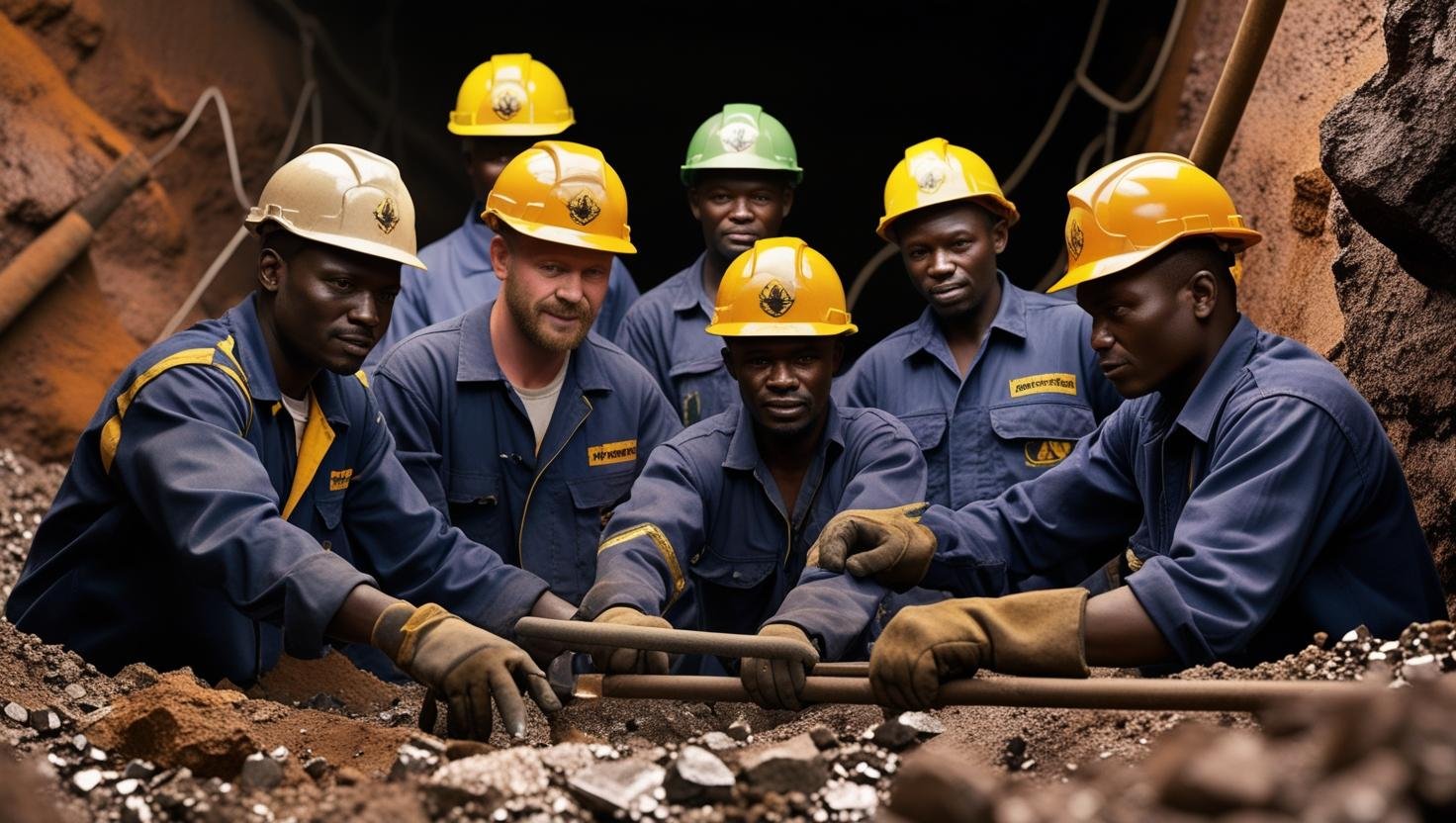
Growing clashes between foreign and domestic miners have marked Zimbabwe’s gold sector in 2025. Foreign investment is considered vital, but local miners are often overlooked in disputes over contested claims. The Zimbabwe Miners Federation (ZMF) has demanded that foreigners be banned from holding small mining concessions. Protection of livelihoods has been prioritized, as artisanal and small-scale miners remain dominant across Zimbabwe’s gold output.
Gold deliveries from small-scale miners were reported as surpassing those of foreign-backed producers during early 2025. Nearly 5,770 kilograms were delivered by locals, while large producers recorded only 2,725 kilograms. A production imbalance has been highlighted, proving local miners’ dominance despite limited capital or advanced technology. Community mining traditions have been preserved, but foreign activity is often seen as exploitative.
Worker relations have been worsened by reports of abuse involving some foreign mining operators in Zimbabwe. A widely reported incident involved a Chinese national who allegedly threatened an employee with a firearm. These confrontations have been criticized as evidence of mistreatment and disregard for local labor rights. Calls for decisive government action have been voiced by the Zimbabwe Miners Federation (ZMF).
Foreign miners’ presence has been increasingly opposed by communities, where resentment has continued to grow in 2025. Evidence of exploitation has been shared, and hostility toward foreigners has been reported in many localities. Profits are believed to leave Zimbabwe, while pollution and social disruption have been left behind. The belief that foreign miners weaken community stability has been repeatedly expressed in public discussions.
Economic policies have also been blamed for intensifying difficulties experienced by both local and foreign mining companies. Zimbabwean law requires 30% of export proceeds to be surrendered in ZiG at official rates. Seventy percent is retained in dollars, yet costs are mostly incurred using foreign currency. Concerns have been raised that such regulations discourage investment while still failing to protect smaller miners.
Overall, 2025 has been described as a tense year for Zimbabwe’s gold mining industry. Domestic miners have been credited with sustaining production, while foreign players have been blamed for exploitation and unrest. Government policy has been viewed as conflicted, balancing foreign capital against local empowerment. The industry’s stability is seen as dependent on reforms that may reduce tensions and strengthen oversight.